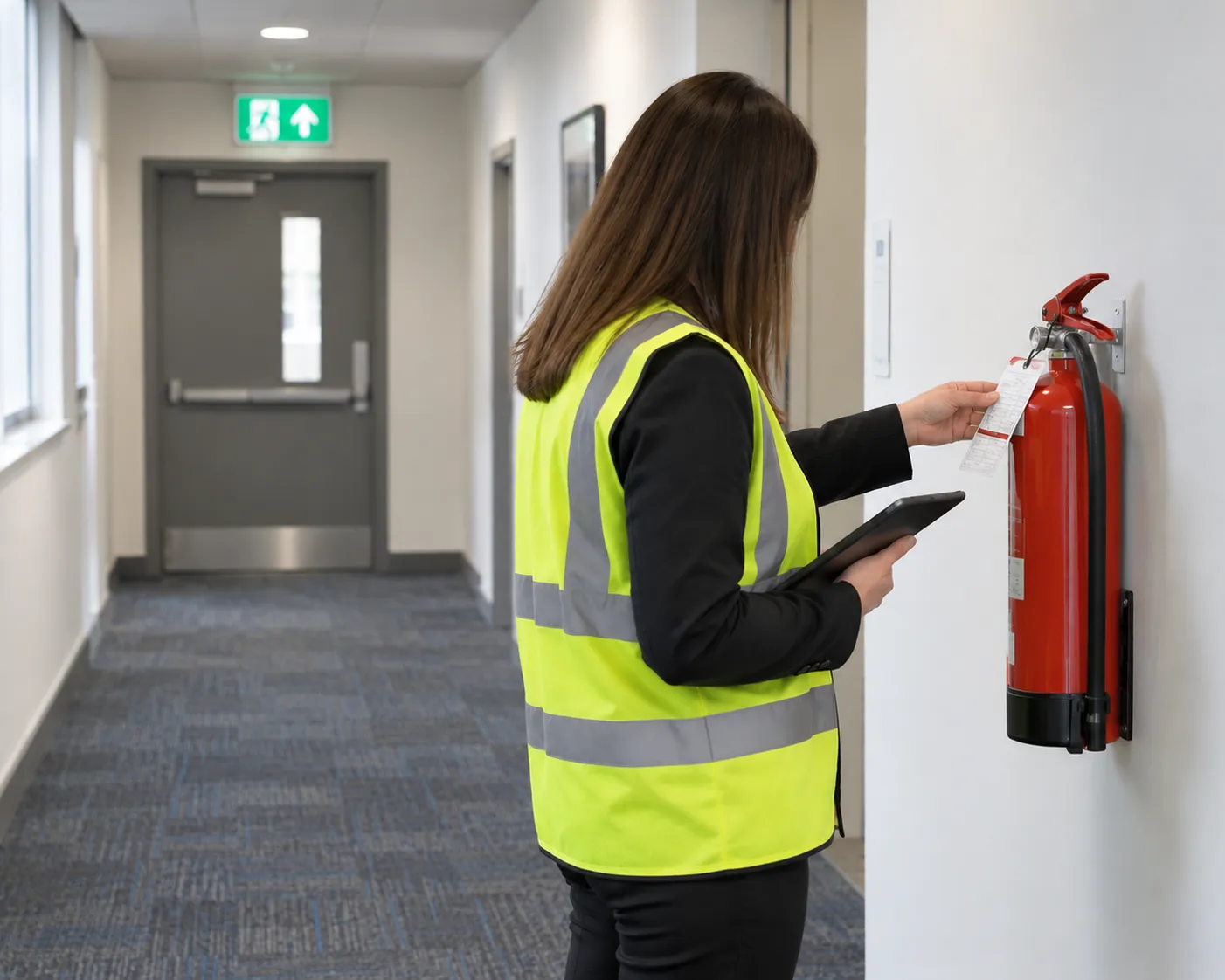
Who Can Carry Out a Fire Risk Assessment?
The law requires a competent person, and the responsible person carries the risk, so here is what competence means and how to check an assessor has it.
Who can carry out a fire risk assessment?
A competent fire risk assessor. The Regulatory Reform (Fire Safety) Order 2005 does not name a licence or a qualification. It requires a “suitable and sufficient” assessment made by a competent person, and it leaves the legal duty with the responsible person, whoever writes the report. Competence is shown by evidence that someone else has checked: third-party certification such as BAFE SP205, a professional register such as the National Fire Risk Assessor Register, the Institute of Fire Safety Managers or the Institution of Fire Engineers, and recognised qualifications such as NEBOSH or FireQual fire risk assessment awards. Owning or managing the building is not competence, so the safe course for any premises is to appoint an assessor who can show that evidence.
What does “competent” mean in law?
The Fire Safety Order defines competence once, in Article 18, and the definition is short: a person is competent where they have “sufficient training and experience or knowledge and other qualities” to carry out the task properly. Nothing in that wording names a certificate. It is a test of whether the person can actually do the job for that building, which is why a retired fire officer may be competent to assess a village hall and out of their depth in a high-rise block with a stay-put strategy.
There is a stricter rule waiting on the statute book. The Building Safety Act 2022 inserted a new Article 9A into the Order, which would prohibit the responsible person from appointing anyone to help with the assessment unless that person is competent, using the same definition. Parliament passed it, but the government has not brought it into force in England or Wales, citing the shortage of qualified assessors. As of September 2026 it still is not in force. In practice enforcing authorities already expect the same thing: if an assessor turns out to have been incompetent, the responsible person will be asked why they thought otherwise.
Should the responsible person do the fire risk assessment themselves?
No. The Order does not forbid it, but a responsible person who has not been trained and assessed as a fire risk assessor is not competent within the meaning of Article 18, and the enforcing authority will judge the assessment on that basis. The consequences of a wrong judgement about a fire door, compartmentation or an escape route are measured in lives, and the people at risk are often asleep. The government’s own consultation in 2026 asked whether responsible persons should keep the right to assess their own premises at all, which shows where the law is heading.
What a responsible person should do instead is read the assessment critically when it comes back. They know the building, its occupants and how it is really used, and that knowledge is what makes a good assessor’s report better. Point out what the assessor could not see, question findings that do not match the building, and keep the action plan moving. That is the responsible person’s part of the job, and it is where the legal duty is discharged.
What is BS 8674:2025?
BS 8674:2025 is the British Standard that sets out, for the first time, a framework for judging the competence of individual fire risk assessors. It was published in August 2025 and defines three levels:
- Foundation, for uncomplicated, low-risk buildings such as small offices and shops.
- Intermediate, for medium-complexity buildings such as hotels, schools, mid-rise residential blocks and public venues.
- Advanced, for complex or higher-risk buildings such as high-rise residential, care homes and large multi-occupied premises.
The standard applies to individuals, not companies, and covers general fire risk assessment only. It does not cover external wall appraisals, invasive inspections or fire engineering. Its value to a responsible person is practical: it gives a shared vocabulary for matching the assessor to the building, and the main registers and certification schemes have restructured around its three levels.
How do you check a fire risk assessor is competent?
Ask for evidence, and check it against the building you need assessing. The usual forms of evidence, from strongest to weakest:
- Third-party certification. An independent body has audited the assessor’s work against real assessments. The main UK scheme is BAFE SP205, which certifies organisations providing life safety fire risk assessment. The Warringtonfire FRACS scheme closed on 31 December 2024 and every FRACS certificate was withdrawn, so a certificate citing it is no longer current.
- A professional register. The National Fire Risk Assessor Register (NFRAR), run by the Institute of Fire Safety Managers, places each registrant at Foundation, Intermediate or Advanced level in line with BS 8674:2025. The Institution of Fire Engineers keeps its own register of fire risk assessors, and the Fire Protection Association runs a register on the same three-level model. Registration involves an assessment of competence and ongoing checks, and every register can be searched online.
- Qualifications. A regulated fire risk assessment qualification, such as a FireQual Level 3 or Level 4 certificate or the NEBOSH Certificate in Fire Safety, shows the assessor has been trained and examined. It does not by itself show they can apply that training to your building, which is why it sits below certification and registration.
- Experience of your building type. Ask for a redacted example report for a similar premises and check that it identifies hazards, the people at risk, the adequacy of the precautions and a prioritised action plan, rather than a tick list.
A serious assessor will usually hold more than one of these: a qualification to get started, a register or certification to prove they can apply it, and a record of buildings like yours. The gap between them is real. A government survey of fire risk assessors in England published in 2024 found that fewer than half held individual certification or professional registration. Membership of a body is not the same as being certified by it.
What is changing for fire risk assessors?
The government has committed to mandatory certification for fire risk assessors in England, a recommendation of the Grenfell Tower Inquiry’s Phase 2 report. Between 26 March and 18 June 2026 the Ministry of Housing, Communities and Local Government consulted on how to do it: a competency framework, certification, formal qualifications, a code of conduct with sanctions, and the question of whether responsible persons should keep the right to assess their own premises. No response has been published at the time of writing and nothing has changed in law. The direction of travel is clear, though, and a responsible person choosing an assessor today would be wise to choose one who would pass tomorrow’s test.
Five questions to ask before appointing an assessor
- Which certification or register are you on, at what level, and can I check it online?
- How many buildings like mine have you assessed in the last year?
- Which standard will you follow, PAS 79-1:2020 for commercial premises or BS 9792:2025 for housing, and will the report say so?
- What happens if you find something you are not competent to judge, such as an external wall system?
- Do you carry professional indemnity insurance that covers fire risk assessment, and for how much?
An assessor who welcomes those questions is usually the right one.
Frequently Asked Questions
Do fire risk assessors need a qualification?
The law tests competence rather than naming a certificate, and competence is shown by third-party certification or a professional register that has checked the assessor’s work. Most assessors on the main registers also hold a regulated qualification such as a FireQual or NEBOSH fire safety certificate. Mandatory certification for assessors in England is expected to follow the 2026 consultation, so an assessor without any of these is a risk today and a liability tomorrow.
Can a fire officer carry out a fire risk assessment?
Serving fire and rescue officers do not carry out assessments for responsible persons, because their service enforces the law. Former officers often work as assessors, and many are highly competent, but experience of fighting fires is not the same as experience of assessing risk in buildings. Judge them on the same evidence as anyone else.
Can my fire alarm or extinguisher company do the assessment?
They can if the person doing it is competent, but be careful. An assessment carried out by a company that also sells the remedial work has an obvious conflict of interest. Ask for the assessor’s own credentials, not the company’s, and read the action plan with that in mind.
Who is liable if the assessment is wrong?
The responsible person remains liable under the Fire Safety Order. An assessor may also be prosecuted under Article 32 for failing to act with due diligence, and can be sued for negligence, but neither transfers the duty. This is why checking competence is a legal safeguard for the responsible person, not just good practice.
Is the position different in Scotland and Northern Ireland?
Both have their own fire safety law, the Fire (Scotland) Act 2005 and the Fire and Rescue Services (Northern Ireland) Order 2006, with the same competence-based approach. BS 8674:2025 and the registers apply across the UK.
FireRecord does not replace competence; it records it. Every report carries the assessor’s declaration and the standard it was written to, and the Trail of Records keeps the reasoning behind every judgement call, so a responsible person can see who assessed the building, on what basis, and what they decided. Find out more at firerecord.co.uk.
Related Articles
Do Holiday Lets and Airbnbs Need a Fire Risk Assessment?
Yes. In England and Wales the Fire Safety Order applies the moment a guest pays to stay, even for one night, and the assessment must be written down.
How Often Should a Fire Risk Assessment Be Reviewed?
Twelve months is the standard interval for reviewing a fire risk assessment, and here is what forces an earlier one, and when a review is not enough.
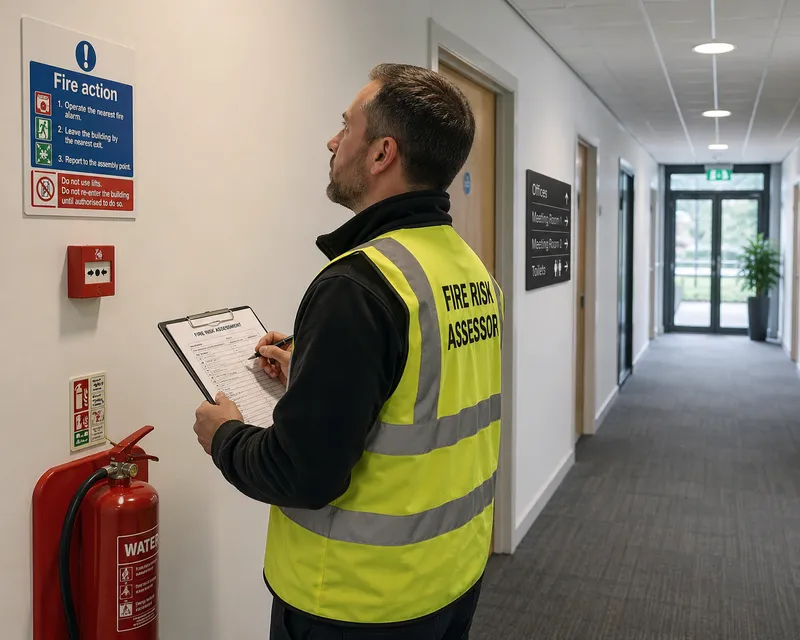
What Is a Fire Risk Assessment? UK Requirements Explained
A clear guide to fire risk assessments in the UK: who needs one, what the law requires, the five-step process, and how often to review. Written for assessors and responsible persons.